


🏃🏻♀️ The digital land run accelerates
NEW Affordable 2BRs in a GREAT virtual neighborhood! Crypto only, pay upfront
🔌 Wilfred on the sticker shock and artificial scarcity of digital land
👩🏼🌾 Josh considers the types of settlers in the Oklahoma Land Run
I’m an unmarried millennial who rents a tiny apartment in New York’s Lower East Side. Even after I nabbed a pandemic discount last year, I still hand over a huge portion of my income to my landlord each month. I know I’m relatively lucky: speculation and high-end development has long priced out many of the neighborhood’s long-time residents. And across the country, people are getting displaced, often evicted due to skyrocketing prices, expiring tenant protections, and housing shortages. But knowing these things doesn’t really make my rent feel less high.

Like many people my age, I’ve had to swallow the reality that homeownership isn’t happening for me any time soon. And I suspect that it’s also people in my demographic who are being lured by the promise of “land ownership” in the metaverse. Metaverse networks like Decentraland, Cryptovoxels, and Sandbox have maps with a finite area, divided up into “parcels” which can only be purchased using proprietary cryptocurrencies. Owning a parcel gives you the right to build upon it anything the game engine permits, or sell it to the highest bidder.
It sounds quirky and cute — if you can’t have a two-bedroom condo in real life, why not build yourself a virtual one? Well, you’d face stiff competition. The market caps of token-based metaverse networks are already ballooning into the many billions, brands are spending big to snap up virtual real estate, and the Wall Street Journal is quoting exuberant financiers who compare their crypto property grabs to “buying land in Manhattan 250 years ago as the city is being built.”

The idea of digital land, in the sense of a virtual landscape where you can run around and interact with other people, isn’t new. The real innovation of crypto land is that there is a limited supply. Unlike Manhattan, an island with finite physical space, these virtual worlds are based primarily around artificial scarcity. Digital land transactions are recorded on a blockchain, a tamper-resistant digital ledger which makes it difficult for any user, including the network’s creators, to break its rules and create more money or land for themselves. Because there’s only so much digital money and land to go around within any given metaverse network, people are willing to pay a lot of real money — sometimes millions of dollars — to own some.
As a New York City renter, I’m dumbfounded that crypto engineers have found a way to recreate the gatekeeping, competition, and speculation that has made physical real estate such a nightmare. But if the digital Manhattan of the future is really being divvied up before my eyes, maybe I still have time to get in on some tiny piece of it. If I can’t afford a metaverse penthouse, can I find a rent-stabilized studio? I don’t want to end up metaverse homeless.
A more important philosophical question is whether we want the internet to feel like land — and if so, how? Our project at New_ Public often talks about designing public parks for the internet. How would these differ from virtual landscapes that can be bought, sold, and speculated on? Can we imagine new models of participating in digital public spaces that aren’t fueled by scarcity, but other kinds of encoded values? What makes something truly public, beyond its openness and accessibility? Are there models of collective ownership that don’t rely on investment returns? We don’t have all the answers, but we are curious about what you think. Please comment here or tweet us your answer.
– Wilfred
OK Boomer, and Sooner
As Wilfred discusses above, the current mania for digital land feels analogous to physical real estate. Except that typically, land speculation happens slowly, one property at a time, even in a competitive real estate market like Manhattan. However, throughout US history, there have been intense moments that resemble the land rush happening right now on platforms like Decentraland.
One such opportunity occurred in 1889, after two tribes in Indian Territory lost their lands for fighting on the South’s side in the Civil War. Congress decreed that all of the land would be available at once in a “Land Run.” Anyone could show up at the border and literally stake a claim to 160 acres in the country or a small lot in a town. As Sam Anderson writes in his excellent book Boom Town:
Oklahoma City is microwave popcorn. It was born all at once. It has a birthday: April 22, 1889. Noon. Precisely at that moment, history flipped a switch. Before, there was prairie. After, there was a city.
Like the crypto world, early Oklahoma City was populated by visionaries caught up in the dream, investors who just wanted to make money, and many who were a combination of both. The former camp was typified by Angelo Scott, a concerned citizen who was interested in OKC’s “long-term civic health, not for the immediate profit of a privileged few.” Scott organized committees to decide where roads, streets1 and everything else would go. William Couch, on the other hand, represented the Boomers, bombastic self-promoters who agitated for access to the territory, and Sooners, who cheated and popped up at the start of the Land Run with a plan for their town and pieces of it already for sale.
Couch, Scott, and the people who followed them, both contributed greatly to the booming city OKC would become after its early, wild years. Couch’s cheating and agitation paid off and made him mayor, at least until he died from a wound incurred in a territorial dispute a year after the Land Run. Scott opened a newspaper, law office and hotel, as well as “the YMCA, the philharmonic, a local singing group, and the First Presbyterian Church,” according to Anderson. After representing the Territory at the World’s Columbian Exposition, Scott served as president of the territorial senate. “His true purpose was to make sure Oklahoma City flourished, spiritually as well as materially,” writes Anderson.
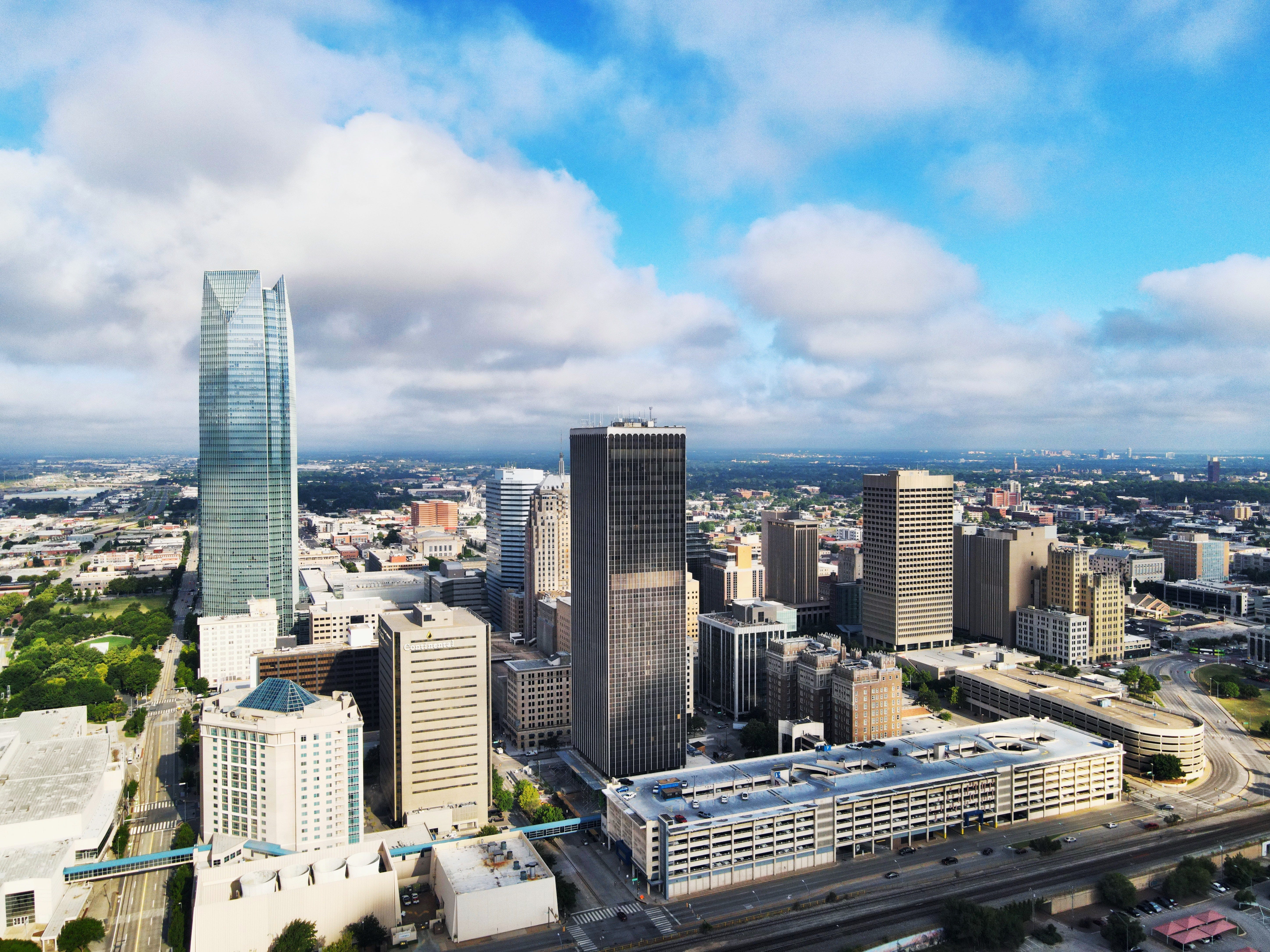
With the hindsight of history, it seems like Scott, who helped stave off conflict by forging compromises and impromptu governance in OKC’s early days, and who created civic groups and institutions, was more important to the development of Oklahoma City, especially through our lens at New_ Public. But as Anderson notes, none of this could have happened without Couch and the Boomers’ relentless campaign to settle Oklahoma.
“Although Angelo Scott was a useful citizen, William Couch was the whole reason Oklahoma City existed,” writes Anderson. “Everyone in the territory was living inside his impossible Boomer dream.” Scott was popular — “Everyone urged him to run for governor,” Anderson writes — but Couch was a “living legend.” Literally “Oklahoma Moses.” In OKC at least, it seems both men were crucial.
From my perch on the outside of this crypto-fueled Land Run, I mostly see modern versions of William Couch, enthusiastic crypto bros who only want to HODL and buy the dip. I hope there are also Angelo Scotts, maybe working behind the scenes in DAO discords to build lasting institutions. But in looking at OKC’s history, I suspect that both types of early enthusiast have a role to play as digital land evolves into whatever it will become. Perhaps there will be thriving meta-metropolises built on digital land, or perhaps, in a reversal of Oklahoma’s origins, one day someone will flip a switch and turn it all off.
– Josh
Open Thread
Next Tuesday, at 12pm EST, we’ll be sending out another Open Thread! Check your email and stop by to chat with us about what’s on your mind.
Pitch us!
Just a reminder that we’re interested in pitches for the next issue of New_ Public Magazine, on the theme of “trust” (and what it means for the internet). We’re open to fiction, visual stories, and multimedia in addition to prose articles. Pitches are due by December 15. If you’ve already emailed us, thanks very much and you’ll be hearing from us soon!
Dreading the inevitable metaverse reboot of the musical Rent (La Bohèmeverse?),
Wilfred and Josh
Illustration by Josh Kramer. Photo of Oklahoma City by Justin Prine, via Unsplash.
New_ Public is a partnership between the Center for Media Engagement at the University of Texas, Austin, and the National Conference on Citizenship, and was incubated by New America.
Curious about the difference between roads and streets? See the “Physical to Digital” section here to learn more.